The layered approach
No single product secures a warehouse, because the threats are different at every hour. During the day the risk is who comes and goes and what leaves with them. At night it is intrusion across a large, often poorly lit footprint. A good plan layers access control, cameras, monitoring, and a physical presence so that a gap in one is covered by another.
Access control for the people problem
Most warehouse loss is not a dramatic night break-in, it is the quiet daytime kind: the wrong person in the wrong area, or product walking out a dock door. Access control fixes who gets where and when. Employees get the doors and hours they need, drivers get the dock and nothing else, and when someone leaves you cut their access instantly instead of rekeying the building. Every entry is logged, so if something goes missing you are not guessing.
Cameras that cover what matters
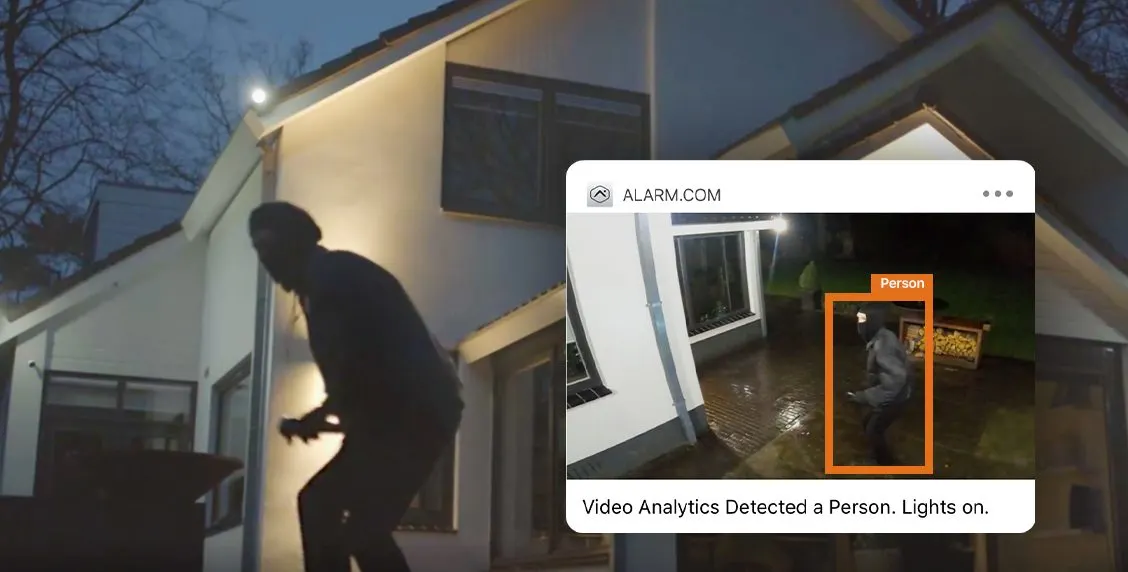
Place commercial cameras on the docks, the main entrances, high-value storage, and the perimeter, with attention to the blind spots between racks and around the building. The goal is coverage you can act on: footage clear enough and kept long enough to matter when a discrepancy shows up weeks later. Tie the cameras to access control and you can pull the badge swipe and the video for the same door at the same moment.
After-hours monitoring and response
When the building is empty, a monitored alarm is what turns an intrusion into a response. The signal reaches the monitoring station, which can dispatch police or an armed officer. For a business, that response time is not a detail, it is the difference between an interrupted entry and a cleaned-out dock by morning.
Large yards: patrol and drones
Fixed cameras struggle with wide open ground: lay-down yards, equipment lots, tank batteries. That is where mobile patrol and drones come in, covering acreage that would take dozens of cameras to watch. For large or spread-out sites, aerial and roving coverage is often the only practical way to see the whole footprint.
Protecting sensitive inventory
If the building holds temperature-sensitive goods or sensitive equipment, environmental monitoring belongs in the plan too, watching for water, heat, and temperature swings that can ruin inventory as surely as a thief.
A Panhandle note
Out here, a lot of what needs securing is oilfield and industrial: remote yards, equipment, copper, and fuel. Those sites are exposed and far apart, which is exactly where layered coverage with patrol and drones earns its keep.
Frequently asked questions
What is the best security for a warehouse?
A layered system: access control, cameras, monitoring, and patrol or drones for the yard. No single piece covers it alone.
Do warehouses need guards or just cameras?
Cameras record a problem; a guard or patrol stops one. Most high-value sites use both.
How do you secure a large outdoor yard?
Perimeter cameras plus mobile patrol and drones, since fixed cameras cannot cover wide open ground.